
In today’s hyper-connected commercial ecosystem, adopting emerging technologies is no longer a luxury—it is a core imperative for market survival. Across manufacturing facilities in Gazipur, textile hubs in Narayanganj, pharmaceutical plants in Dhaka, and logistics networks in Chattogram, real-time data visibility dictates operational success.
Connecting the Internet of Things (IoT) with Enterprise Resource Planning (ERP) systems bridges physical shop-floor machinery with back-office management databases. By streaming live telemetry data directly into enterprise databases like SAP Business One (powered by SAP HANA), organizations convert physical operations into immediate, data-backed intelligence.
At Fusion Infotech, Bangladesh’s premier certified SAP technology authority and digital transformation partner, we equip growing small and mid-sized enterprises (SMEs) and industrial conglomerates with connected cloud ERP architectures that turn real-time sensor streams into strategic growth drivers.
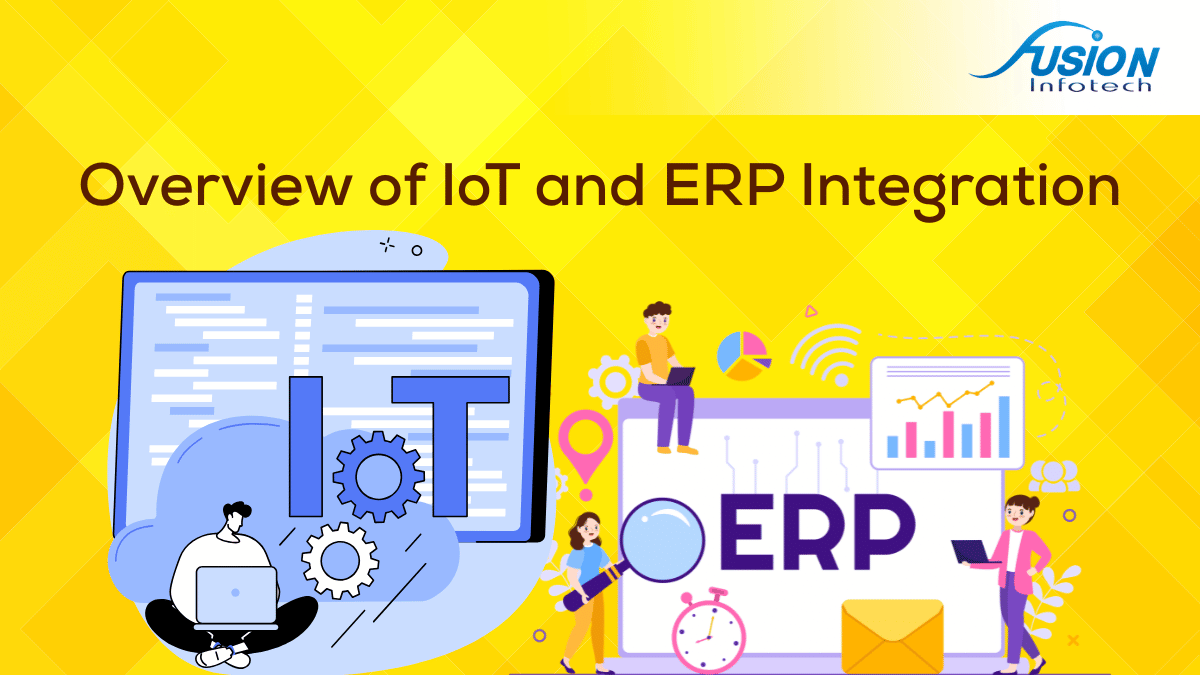
To leverage the combined power of these technologies, enterprise leaders must understand how each component functions within a unified digital matrix:
An ERP system serves as the central operational backbone of an organization. It integrates transactional data across financial accounting, procurement, human resources, sales, and warehouse management into a single, reliable source of truth.
The Internet of Things (IoT) represents a network of physical devices—including edge sensors, smart meters, GPS trackers, RFID tags, and programmable logic controllers (PLCs)—that capture physical environmental metrics (temperature, pressure, speed, vibration) and transmit them over secure wireless networks.
                  [ Industrial IoT Sensors / PLCs ]
                 (Temperature, Vibration, RFID, GPS)
                                  │
                                  ▼
                   [ Edge Gateway / MQTT Protocol ]
                                  │
                                  ▼
             ==========================================
             [ SAP Business One ERP (SAP HANA Core) ]
             ==========================================
                                  │
    ┌─────────────────────────────┼─────────────────────────────┐
    ▼                             ▼                             ▼
[ Automated Work Orders ]  [ Predictive Maintenance ]   [ Live Quality Control ]
When IoT edge devices connect to SAP ERP platforms, the system moves beyond recording historical data to executing automated, real-time operational workflows. For example, if a textile machine exceeds safe operating temperature limits, the IoT sensor immediately triggers a maintenance work order in SAP Business One, reserving replacement parts in the warehouse and notifying engineering teams instantly.
Deploying an integrated IoT-ERP environment through Fusion Infotech unlocks transformative commercial advantages tailored to Bangladesh’s industrial landscape:
Eliminates operational blind spots by displaying live shop-floor telemetry alongside financial metrics on interactive executive dashboards.
Replaces manual logging with automated sensor feeds, eliminating data entry errors and accelerating production cycles across manufacturing lines.
Monitors asset health metrics in real time to predict equipment failures before they happen, drastically reducing unplanned downtime and extending machinery lifespan.
Tracks power consumption, water usage, and raw material throughput in real time, enabling plant managers to eliminate resource waste and optimize utility costs.
Integrates GPS and temperature sensors into cargo containers to monitor sensitive shipments (such as pharmaceuticals or frozen foods), ensuring cold-chain integrity from factory floor to retail buyer.
Captures precision tolerances on the assembly line, automatically flagging defective batches in the ERP system and isolating compromised raw material lots instantly.
Provides C-suite executives with immediate visibility into yield variances, scrap costs, and unit margins, replacing historical guesswork with real-time operational intelligence.
Enables real-time order tracking for corporate buyers, giving them precise visibility into manufacturing progress and shipment arrival times.
Automates environmental and safety logging required by industrial regulators, maintaining audit-ready compliance logs within the central ERP repository.
Provides an elastic software foundation that scales seamlessly as organizations add new manufacturing plants, smart warehouses, or connected IoT endpoints.
In the Internet of Things ecosystem, real-time data refers to the continuous, low-latency stream of operational metrics generated by edge sensors, transmitted over secure protocols (such as MQTT or HTTPS), and processed within milliseconds.
Unlike batch processing—where data is collected and uploaded at the end of a shift or workday—real-time IoT feeds deliver immediate operational feedback:
Processing these high-frequency data streams requires a high-performance in-memory database like SAP HANA, which ingests millions of data points continuously without slowing down core transactional accounting tasks.
Data integration in ERP is the process of consolidating and standardizing data feeds from disparate operational touchpoints—such as shop-floor sensors, point-of-sale (POS) terminals, e-commerce storefronts, and third-party logistics tools—into a single, unified database architecture.
In a traditional setup, departments maintain isolated software applications, leading to data fragmentation, conflicting inventory counts, and delayed financial reporting. By establishing a centralized data integration model within SAP Business One, Bangladeshi enterprises achieve complete alignment across sales, procurement, production, inventory, and financial accounting.
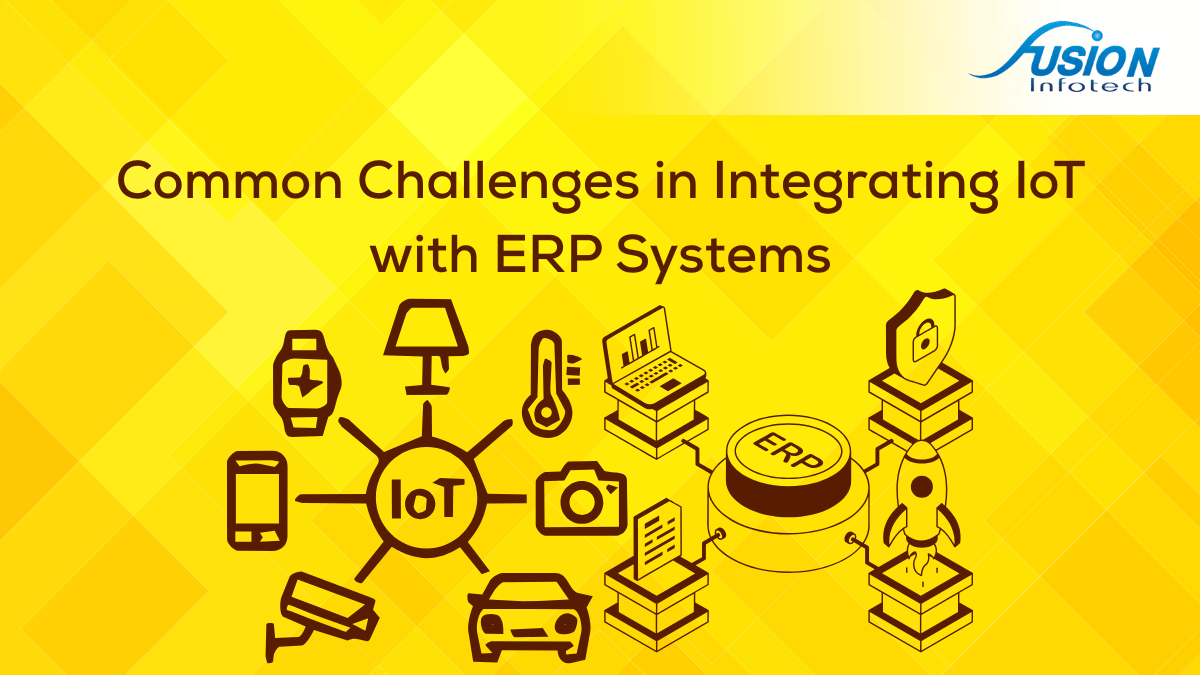
While the benefits of IoT-ERP integration are substantial, overcoming technical implementation hurdles requires experienced enterprise architecture:
IoT sensors monitor equipment health metrics like temperature and vibration in real time. When metrics deviate from safe baselines, the IoT gateway automatically generates a maintenance ticket in SAP Business One, assigning technicians and reserving spare parts before a breakdown occurs.
Yes. Modern IoT edge sensors and cloud-hosted SAP Business One solutions provide modular deployment options. SMEs can start by sensorizing critical bottlenecks (such as main boilers or refrigeration units) and expand incrementally as ROI is demonstrated.
SAP HANA utilizes an in-memory computing database that processes transactional logging and complex analytics simultaneously in RAM, handling millions of high-frequency sensor inputs per second without system lag.
Fusion Infotech's open API architecture enables seamless integration with localized platforms like WorkedIn HRMS for automated shop-floor worker time-tracking and NBR-compliant tax reporting add-ons.
Operating a modern industrial or trading enterprise on lagging manual logs, disconnected spreadsheets, or legacy software exposes your business to unexpected machinery downtime, inventory inaccuracies, and compressed margins. Integrating IoT with ERP for real-time data delivers the operational visibility, predictive capabilities, and structural stability required to win in today's fast-paced commercial environment.
By uniting physical machine telemetry, supply chain tracking, and back-office accounting onto a single cloud-ready platform, SAP ERP turns raw data streams into a continuous competitive advantage.
Ready to future-proof your production lines and achieve Industry 4.0 operational excellence? Partner with Fusion Infotech—Bangladesh’s premier certified SAP technology authority.
Contact the senior enterprise architects at Fusion Infotech today to schedule a comprehensive IoT-ERP integration consultation and live demonstration.


.svg)
© 2025 Fusion Infotech Ltd. All rights reserved.






.png)
