
The era of using Enterprise Resource Planning (ERP) systems merely as digital filing cabinets is officially over. In 2026, Industry 4.0 has evolved far past basic task automation. Today, the most profitable businesses in Bangladesh and across Southeast Asia are leveraging Artificial Intelligence (AI) and Machine Learning (ML) to transform their ERPs from passive databases into proactive, revenue-generating engines.
For enterprise decision-makers, the question is no longer what Artificial Intelligence is, but how it can be aggressively deployed to slash operational costs, predict supply chain disruptions, and drive unprecedented profitability in a volatile global market.
In this comprehensive guide, we will explore how intelligent automation is reshaping the enterprise software landscape, the mechanics of Industry 4.0, and how businesses are partnering with regional leaders like Fusion Infotech to seamlessly implement these cutting-edge technologies.
To understand the power of modern ERPs, one must first understand the ecosystem they operate within. Industry 4.0, often referred to as the Fourth Industrial Revolution, represents the complete integration of advanced digital technologies into industrial processes. It is characterized by the convergence of the Internet of Things (IoT), big data, cloud computing, and advanced artificial intelligence.
While traditional manufacturing relied on isolated machines and human intervention, Industry 4.0 creates a "Smart Industry" environment. Cyber-physical systems and IoT sensors collect massive, continuous streams of data from factory floors, supply chains, and consumer endpoints. However, raw data alone is useless. This is where AI and ML step in acting as the "brain" of the operation, analyzing this data within the ERP to make real-time, autonomous decisions.
While often used interchangeably, AI and Machine Learning play distinct roles within an ERP architecture:
Modern ERPs utilize various branches of AI to maximize efficiency. For instance, Natural Language Processing (NLP) powers intelligent ERP chatbots that allow executives to query financial databases using conversational speech. Computer Vision is integrated into factory assembly lines to instantly detect product defects and update ERP inventory logs in real-time. Deep Learning and Genetic Algorithms are used to optimize complex logistics routes across global supply chains.
Traditional legacy ERPs required massive amounts of manual data entry, leaving executives to make reactive decisions based on historical reports that were often weeks old. An AI-powered ERP flips this model entirely, moving businesses from a reactive posture to a predictive one.
By utilizing continuous machine learning, modern ERPs act as a digital nervous system for your company. They analyze millions of data points to automate routine tasks, predict future market trends, and instantly flag inefficient processes that are bleeding capital.
The financial impact of AI in ERP systems is realized across several major operational pillars:
In asset-heavy industries like manufacturing and textiles, equipment downtime is one of the largest drains on profitability. Today, ERP systems leverage AI to execute proactive maintenance.
AI algorithms monitor factory equipment and IoT sensors in real-time to detect minute anomalies in temperature, vibration, or energy consumption. By recognizing these patterns, the ERP can predict and prevent machinery failures before they happen, automatically scheduling maintenance during off-hours.
Furthermore, AI is used to create "Digital Twins"—exact virtual replicas of physical factory equipment hosted within the ERP. Engineers can use these digital twins to run simulations, optimize performance parameters, and train technicians using augmented reality, all without risking damage to the actual physical machinery.
Mundane tasks, such as manual invoice processing, basic HR onboarding, and cross-departmental data reconciliation, are fully automated in 2026. AI detects inefficient workflows and actively suggests solutions to cut administrative costs. By eliminating manual data entry, businesses drastically reduce human error and free up their workforce to focus on high-value, strategic initiatives.
Additionally, AI can monitor factory energy usage, identifying processes that consume too much power and implementing predictive diagnostics to minimize resource waste, thereby driving sustainability and lowering overhead.
Global supply chains are inherently volatile. AI-powered ERPs anticipate bottlenecks by analyzing global weather patterns, geopolitical news, and historical shipping data.
If a delay is predicted at a major shipping port, the ERP will automatically suggest alternative vendors, reroute logistics, or adjust raw material reorder points to prevent manufacturing stockouts. This ensures that production schedules remain intact and customer deliveries are never compromised.
Deploying Artificial Intelligence at an enterprise level requires far more than simply purchasing software licenses; it demands world-class architectural implementation, data mapping, and deep industry expertise. As the premier digital transformation authority in Bangladesh and Southeast Asia, Fusion Infotech is at the absolute forefront of the AI-ERP revolution.
Whether you are a local conglomerate upgrading from legacy systems or a multinational corporation seeking to unify global data, Fusion Infotech provides the expert consultancy and deployment capabilities required to seamlessly integrate intelligent automation into your core business.
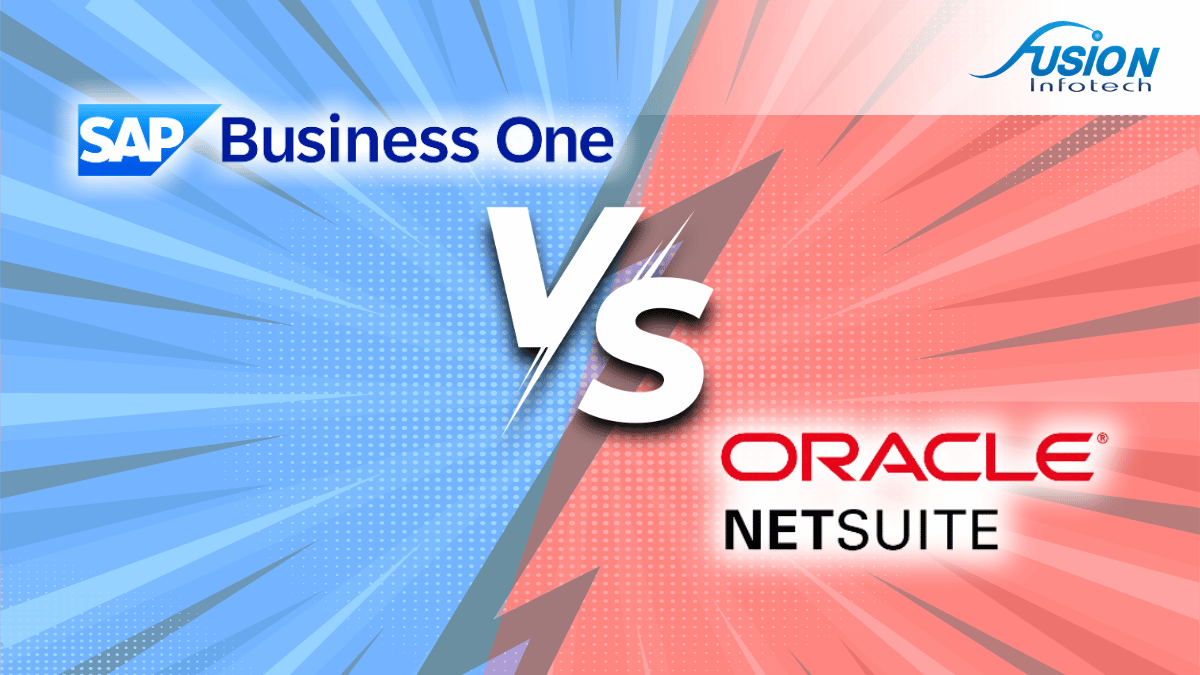
For Tier-1 enterprises requiring massive scale and strict global compliance, Fusion Infotech's certified consultants are elite implementers of the world's most powerful AI-driven platforms:
For rapidly scaling businesses that require an agile, highly localized solution, Fusion Infotech offers Fusion Robust. This proprietary, cloud-native ERP is infused with intelligent automation specifically designed to handle the dynamic, multi-currency, and localized tax environments of Southeast Asian markets. It eliminates manual workloads, optimizes resource allocation, and delivers real-time executive dashboards that drive immediate profitability for mid-to-large market enterprises.
True profitability happens when Artificial Intelligence is applied to solve specific, highly complex business pain points. Beyond core ERP implementation, Fusion Infotech has developed a complete ecosystem of intelligent software solutions designed to power every facet of your organization:
A common misconception regarding Industry 4.0 is that AI-powered ERPs will replace the human workforce entirely. In reality, in 2026, AI acts as an augmenting force rather than a destructive one.
While it is true that highly repetitive, manual data-entry jobs are becoming obsolete, the integration of AI is creating a massive demand for new skill sets. By automating administrative tasks, AI frees up employees to utilize critical cognitive skills, such as complex problem-solving, emotional intelligence, and creative business strategy.
Companies that invest heavily in AI-driven ERPs—and simultaneously invest in training and reskilling their teams to work alongside these intelligent systems, are the ones dominating their respective industries. The future of enterprise success requires a seamless balance between human ingenuity and artificial intelligence.
Q1: How does an AI-powered ERP reduce operational costs?
A: AI reduces costs across multiple vectors. It eliminates the need for manual administrative labor, detects financial anomalies (like duplicate invoices) in real-time, optimizes inventory levels so capital isn't tied up in dead stock, and predicts equipment failures before they cause expensive, catastrophic factory downtime.
Q2: Is AI built directly into the ERP system?
A: Yes. Modern cloud ERPs natively incorporate AI technologies. For example, ERP AI chatbots use Natural Language Processing (NLP) to interact with users conversationally, allowing managers to ask questions like "What were our Q3 sales margins?" and receive instant, data-backed answers without manually pulling reports.
Q3: Can mid-sized businesses in Bangladesh benefit from AI ERPs?
A: Absolutely. While massive global enterprises utilize expansive platforms like Oracle and SAP, agile platforms like Fusion Robust bring enterprise-grade intelligent automation to mid-sized companies. This allows growing businesses to scale their operations and revenue without massively expanding their payroll or IT infrastructure.
Q4: What are some real-world examples of AI in ERP systems?
A: Real-world examples include using ML algorithms to predict consumer demand to optimize factory knitting schedules, using computer vision to analyze video data for quality assurance on an assembly line, and utilizing predictive analytics to identify geopolitical risks that could disrupt global shipping logistics.
Q5: Is it difficult to migrate a legacy system to an AI-powered ERP?
A: Migrating from legacy, on-premise servers to an intelligent cloud ERP is a complex technical undertaking. It should never be attempted without a certified implementation partner. Experts like Fusion Infotech map your existing historical data, build a secure cloud architecture, and execute the migration seamlessly, ensuring zero disruption to your daily operations.
Do not let your business fall behind in the AI revolution. Whether you require a massive, global Oracle or SAP deployment, or the agile, localized power of Fusion Robust, the expert technology consultants at Fusion Infotech are ready to turn your operational data into your greatest competitive advantage.
Contact Fusion Infotech today to schedule your comprehensive enterprise AI consultation and take the first step toward intelligent profitability.


.svg)
© 2025 Fusion Infotech Ltd. All rights reserved.






.png)
