
Are you looking for the best Hospital Management Software in Bangladesh?
If you are a hospital administrator, medical director, or healthcare entrepreneur, you know how incredibly complex running a modern medical facility can be. From managing hundreds of patient admissions to tracking pharmacy inventory and securing sensitive medical records, manual administration is no longer sustainable. In today's hyper-connected world, relying on paper-based systems or fragmented legacy tools leads to critical errors, financial leakage, and compromised patient care.
Fortunately, enterprise-grade hospital management software fulfills all these operational needs. At Fusion Infotech, we understand that running a hospital in Bangladesh requires a robust, scalable digital infrastructure. With over 13 years of expertise in enterprise digital transformation and ERP software deployments across Southeast Asia, Fusion Infotech is at the forefront of revolutionizing healthcare administration.
In this comprehensive guide, we will explore the essential features of online hospital management, the architecture of modern medical ERPs, and how integrating modules like e-prescription, SMS alerts, and the WorkedIn HRMS platform can completely transform your healthcare facility.
The use of Hospital Management Software in Bangladesh has revolutionized the national healthcare system. Simply put, a Hospital Management System (HMS) is an integrated software platform that automates the administrative, financial, and clinical operations of a healthcare facility.
Traditionally, hospitals used separate, disconnected systems for different departments. Today, a modern HMS provides a complete ERP software solution. It integrates patient management, pharmacy dispensing, inventory tracking, billing, accounting, and HR management into one centralized database.
Whether you are looking to upgrade an older arch hospital management software system or implement a brand new cloud-based infrastructure, the goal remains the same: optimizing operations, reducing overhead costs, and enhancing clinical efficiency. For instance, Fusion Infotech's hospital ERP solutions offer an intuitive, user-friendly interface that simplifies complex workflows like investigation reporting and dynamic billing. It is highly scalable, requiring minimal learning time, and designed to adapt to the ever-changing regulatory landscape of Bangladesh’s healthcare sector.
To truly modernize a healthcare facility, your software must encompass these seven critical features:
Hospital management software enables seamless tracking of patient demographics, medical histories, and discharge summaries. Furthermore, online hospital management portals allow patients to book appointments remotely, reducing crowded waiting rooms and improving intake speed.
Paper charts are prone to loss and illegibility. An EMR module allows doctors to securely access patient progress and share data across departments instantly. Additionally, an integrated e-prescription tool eliminates handwriting errors, automatically cross-referencing prescribed medications against the hospital’s pharmacy inventory.
An HMS automates the entire revenue cycle. It accurately compiles room charges, consultation fees, and lab costs into a single unified invoice. It also manages complex insurance claim submissions and corporate billing, reducing administrative friction.
A hospital is also a massive logistical operation. ERP software integration tracks medical supplies, surgical equipment, and pharmacy stock levels in real time. It can automate vendor purchase orders when critical medications fall below threshold levels, preventing life-threatening stockouts.
This feature facilitates seamless communication between the diagnostic labs and the consulting doctors. Test orders are sent digitally, and results are uploaded directly into the patient’s EMR, accompanied by automated SMS notifications alerting the patient that their report is ready.
Hospital administrators need data to lead effectively. Modern software generates real-time analytics on bed occupancy rates, departmental revenue, inventory wastage, and patient outcomes, empowering the C-suite to make data-driven strategic decisions.
Healthcare data is incredibly sensitive. A premier HMS ensures bank-grade data security through role-based access controls, end-to-end encryption, and automated cloud backups, ensuring compliance with global and national data protection standards.
Implementing a digital core in your hospital provides immediate, measurable benefits:
A comprehensive Hospital Management System operates through interconnected modules. Here are the five most vital components:
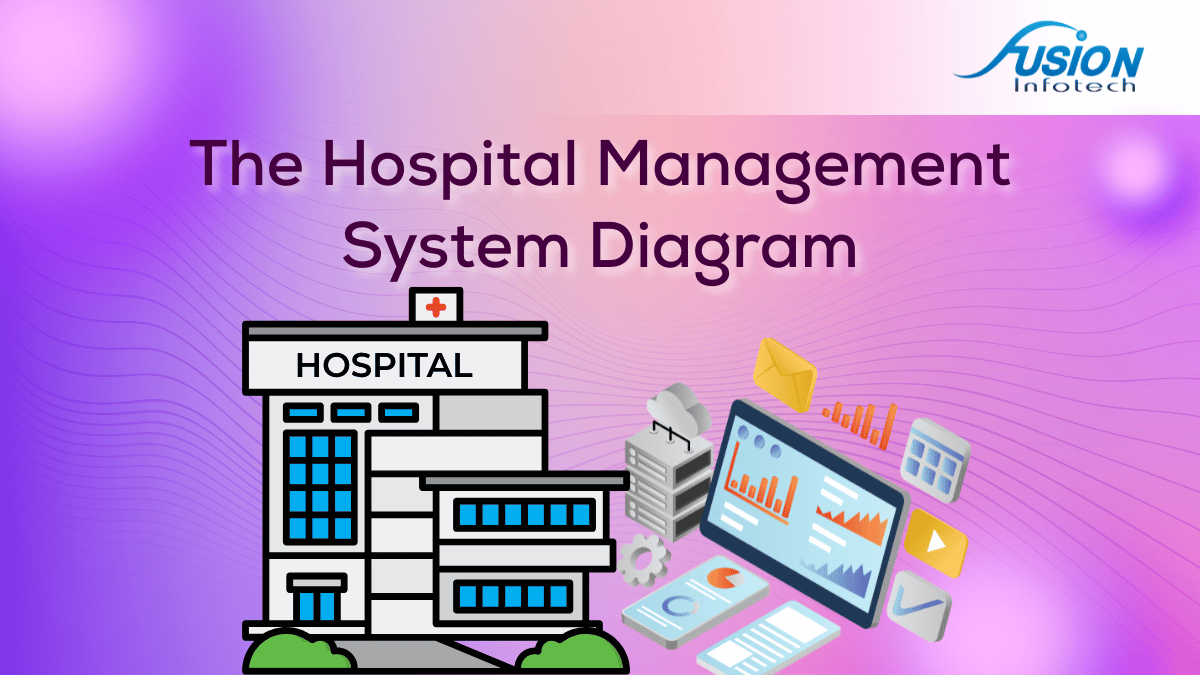
At Fusion Infotech, we know that successful software deployment requires meticulous planning. Before writing a single line of code or configuring a server, our elite consulting team utilizes strict architectural diagrams to blueprint your hospital’s operations:
While Fusion Infotech provides the ultimate technological framework, the human element of healthcare administration cannot be ignored. A Hospital Management Course is a specialized academic program designed for healthcare administrators and executives.
These postgraduate programs cover healthcare regulations, financial management, marketing, and strategic planning. While a Hospital Management Course teaches administrators the theory of running a hospital, an HMS is the tool they use to execute that theory. Today, the most successful medical facilities in Bangladesh are run by administrators who possess strong management education and utilize powerful ERP software to enforce those management principles.
Implementing Hospital Management Software in Bangladesh has revolutionized the healthcare sector. By streamlining clinical processes, securing medical data, and drastically reducing operational costs, hospitals can finally focus their maximum energy on what truly matters: saving lives and improving patient care.
However, the success of your digital transformation depends entirely on your technology partner. An Enterprise Resource Planning (ERP) platform is the strategic foundation of your hospital.
Led by highly certified enterprise architects, Fusion Infotech brings over a decade of deployment experience to the healthcare sector. Whether you need a secure cloud infrastructure, a customized HMS, or comprehensive workforce management through our WorkedIn ecosystem, we ensure your facility operates with zero friction.
Ready to eliminate technical debt and future-proof your hospital? Partner with the premier software deployment experts in Bangladesh. Contact the senior consultants at Fusion Infotech today to schedule your comprehensive healthcare enterprise blueprinting session.
Ans: Yes, absolutely. Premium Hospital Management Software deployed by experts like Fusion Infotech is highly customizable. The modules, reporting dashboards, and workflows can be tailored specifically to your hospital’s size, medical specialties (e.g., Maternity vs. Orthopedics), and unique administrative requirements.
Ans: Yes. A modern HMS is built with open APIs, allowing it to seamlessly integrate with external laboratory management systems, specialized radiology software (PACS), national health databases, and mobile financial services (MFS) for easy patient payments.
Ans: By digitizing records, doctors gain instant access to a patient’s complete medical history, preventing dangerous drug interactions and redundant testing. Furthermore, features like online appointment booking, e-prescription, and automated SMS reminders create a smoother, stress-free experience for the patient, ensuring they receive timely and coordinated care.


.svg)
© 2025 Fusion Infotech Ltd. All rights reserved.






.png)
