
In today’s fiercely competitive manufacturing landscape, operational agility is the ultimate currency. For the dynamic and intricate ceramic industry, a sector defined by complex chemical recipes, high-energy kiln processes, and precise quality standards, the significance of Enterprise Resource Planning (ERP) cannot be underestimated.
The fusion of modern ERP software and ceramic manufacturing offers a formidable solution to overcome traditional production bottlenecks. At Fusion Infotech, Bangladesh’s premier digital transformation and ERP implementation authority, we understand that off-the-shelf software is not enough. The ceramic sector requires an enterprise architecture tailored to its unique manufacturing landscape.
Step into the world of ERP for ceramics. Unveil the power of a bespoke ERP system designed explicitly to offer precise control over corporate operations, minimize wastage, and maximize structural agility. Discover the endless possibilities that cloud ERP options hold for the ceramics sector, because your industry deserves a technological foundation built for growth.
ERP (Enterprise Resource Planning) is a comprehensive software solution that integrates and streamlines various corporate operations into a single, unified database. It serves as the digital nervous system of an enterprise, orchestrating key functions across finance, human resources, supply chain, inventory management, and customer relationship management (CRM).
Think of ERP software as a grand conductor, harmonizing an organization’s complex symphony of business activities. It provides a centralized platform that eradicates data silos, enabling efficient communication and collaboration across different departments and multiple factory locations.
Modern ERP software offers features and modules tailored to specific industrial needs. It automates repetitive administrative tasks, optimizes manufacturing workflows, enhances data accuracy, and generates intelligent reporting. This empowers C-suite decision-makers with real-time financial and operational insights for strategic planning.
When it comes to ceramic manufacturing, standard software falls short. An industry-specific ERP software offers features that cater precisely to the production of tiles, sanitaryware, and advanced ceramics.
1. Streamlined Ceramic Manufacturing: ERP software tailored for the ceramics industry optimizes the entire manufacturing process, from raw material formulation (clay, feldspar, silica) to finished product distribution. It manages complex routing, enhancing productivity and drastically reducing lead times.
2. Advanced Inventory Management: Ceramics businesses gain precise, bin-level control over their inventory. The software enables real-time tracking of bulk raw materials, work-in-progress (WIP) goods, and finished ceramic tiles, ensuring optimal stock levels and minimizing material spoilage.
3. Procurement and Supply Chain Optimization: ERP solutions enable the effective management of the procurement process. From sourcing raw materials globally to localized vendor management, ERP streamlines purchasing activities, ensuring a resilient supply chain and preventing production halts.
4. Business Process Automation: ERP software empowers ceramic businesses with automated workflows. By automating high-volume tasks such as order processing, complex invoicing, and routine quality checks, ERP frees up your workforce to focus on strategic growth and product innovation.
5. Real-time Insights and Analytics: ERP systems provide real-time analytics, offering executives valuable insights into production performance, kiln energy utilization, sales trends, and customer preferences.
6. Quality Control and Traceability: Defective ceramics impact the bottom line immediately. ERP software offers robust quality control parameters, ensuring adherence to industry standards. It enables end-to-end batch traceability, allowing businesses to track the origin of raw materials used in every single ceramic tile.
7. Enhanced Financial Management: ERP solutions streamline financial operations by automating accounts receivable, payable, and general ledger activities. They ensure tax compliance (such as NBR regulations in Bangladesh), accurate cost-of-goods-sold (COGS) forecasting, and improved overall profitability.
In the ever-evolving landscape of industrial manufacturing, the need for a powerful enterprise management system is absolute. Ceramics are utilized across diverse sectors, from real estate construction to intricate interior design, presenting unique production challenges that demand a tailored digital solution.
The ceramics industry relies heavily on complex recipe management, volatile energy costs (like gas for kilns), and multi-stage production processes (molding, glazing, firing). Every industry requires an ERP, but the ceramics sector specifically needs a system that can seamlessly integrate these physical processes with financial data.
Implementing ERP software provides real-time visibility into the shop floor. It empowers manufacturers to exercise strict control over their business activities, minimizing defect rates (breakage) and ensuring the timely delivery of raw materials. By implementing an ERP system, ceramics businesses gain a distinct competitive advantage: improved operational efficiency, reduced overhead costs, enhanced product quality, and superior customer satisfaction.
When evaluating the best ERP software for mid-market and growing enterprises, no solution performs better than SAP Business One. As a certified SAP implementation partner, Fusion Infotech deploys SAP Business One to help ceramic manufacturers rationalize their operations from a single, globally recognized platform.
Successfully deploying an ERP system is not just about software; it is about enterprise architecture. Here is the strategic blueprint for implementing ERP in the ceramic sector:
1. Assess Industry Challenges: Identify specific pain points—whether it is high raw material wastage, energy inefficiencies, or disconnected sales data. Understand exactly how ERP will reconcile these operational gaps.
2. Embrace Automation: Recognize the value of automation in optimizing daily operations. ERP acts as the catalyst for reducing human data-entry errors and speeding up administrative workflows.
3. Establish Strict Control: Define clear corporate objectives and Key Performance Indicators (KPIs). Ensure your ERP system is configured to enforce strict budget and quality management protocols.
4. Define Industry-Specific Processes: Ceramic manufacturing is unique. Your ERP must be adapted to handle specific processes like moisture control tracking, shrinkage calculations, and recipe formulations.
5. Streamline the Supply Chain: Implement ERP modules to handle purchasing, vendor lead times, and inventory levels, ensuring you never run out of critical raw materials like silica or specialized glazes.
6. Partner with Deployment Experts: Adopt industry best practices by partnering with an elite deployment authority. At Fusion Infotech, our zero-failure track record ensures your implementation is seamless, secure, and perfectly aligned with your business model.
7. Stay Digitally Advanced: Leverage ERP to stay ahead of market trends, support your workforce with mobile access, and continuously monitor enterprise health.
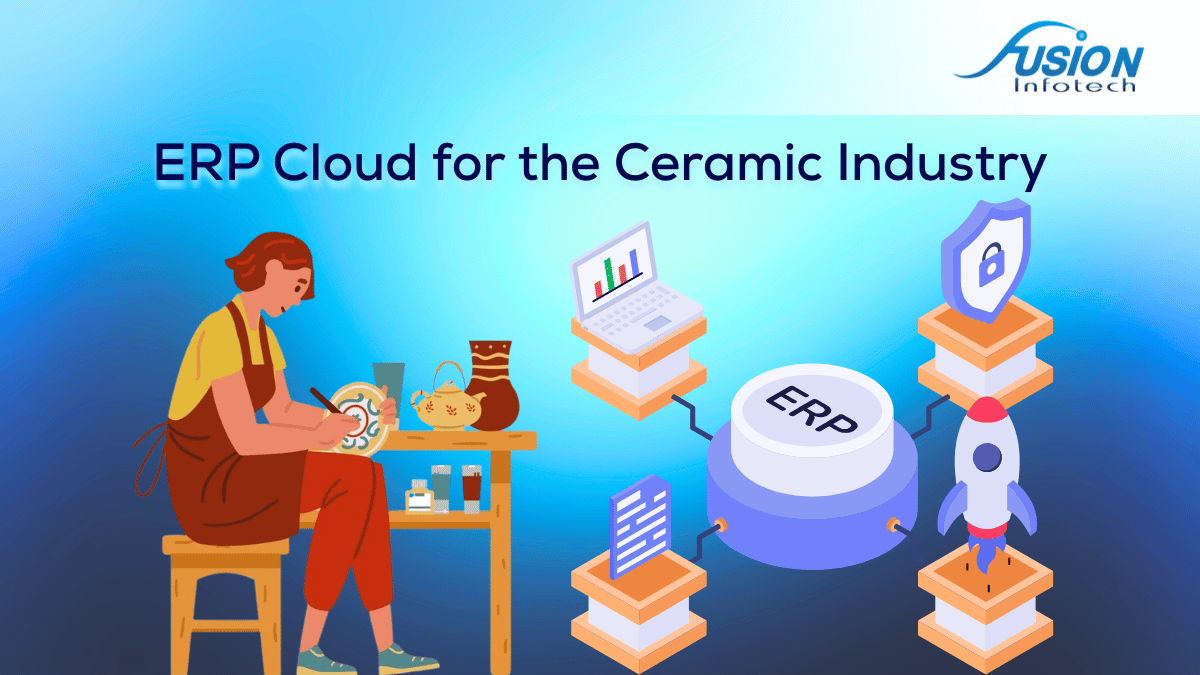
In the modern manufacturing landscape, leveraging ERP in the Cloud has become a transformative force. The combination of industry-specific ERP and cloud infrastructure offers unprecedented advantages.
By adopting Cloud ERP solutions, ceramic manufacturers eliminate massive upfront hardware costs (CapEx) in favor of scalable computing resources. Cloud-based ERP enables real-time access to critical information from any location—allowing a CEO in Dhaka to view real-time kiln temperatures or sales data from a factory floor in another district.
Furthermore, cloud infrastructure (like Fusion Robust) empowers businesses with enterprise-grade cybersecurity and automated disaster recovery. With mobile accessibility, seamless updates, and reduced IT overhead, Cloud ERP is revolutionizing the ceramic industry.
Integrating an Enterprise ERP system (like SAP or Oracle) with your CRM and manufacturing process flow is an absolute game-changer. This unified architecture bridges the gap between customer demand and factory output.
When CRM and manufacturing are integrated, a closed deal instantly updates production schedules and triggers raw material procurement. This deep integration enhances floor-level visibility, ensures accurate sales lead tracking, and prevents the over-promising of inventory. By integrating procurement, manufacturing, and customer service into one continuous digital thread, ceramic businesses drastically improve their Return on Investment (ROI) and guarantee the timely delivery of flawless products.
An Enterprise Resource Planning (ERP) platform is much more than a software utility; it is the strategic foundation upon which modern ceramic manufacturing businesses scale, optimize, and compete. By automating repetitive tasks, uniting cross-departmental operations, and extracting real-time business intelligence, ERP unlocks immediate operational cost savings.
As the ceramic industry embraces digital advancements, operating without a unified system is no longer sustainable. From raw material procurement to final dispatch, an integrated ERP system empowers you to meet aggressive market demands while maintaining strict control over product quality and profitability.
Ready to eliminate technical debt and future-proof your manufacturing operations? Partner with the premier ERP deployment experts. Contact the senior enterprise architects at Fusion Infotech today to schedule your comprehensive ERP blueprinting session and secure your long-term digital growth.


.svg)
© 2025 Fusion Infotech Ltd. All rights reserved.







.png)
