
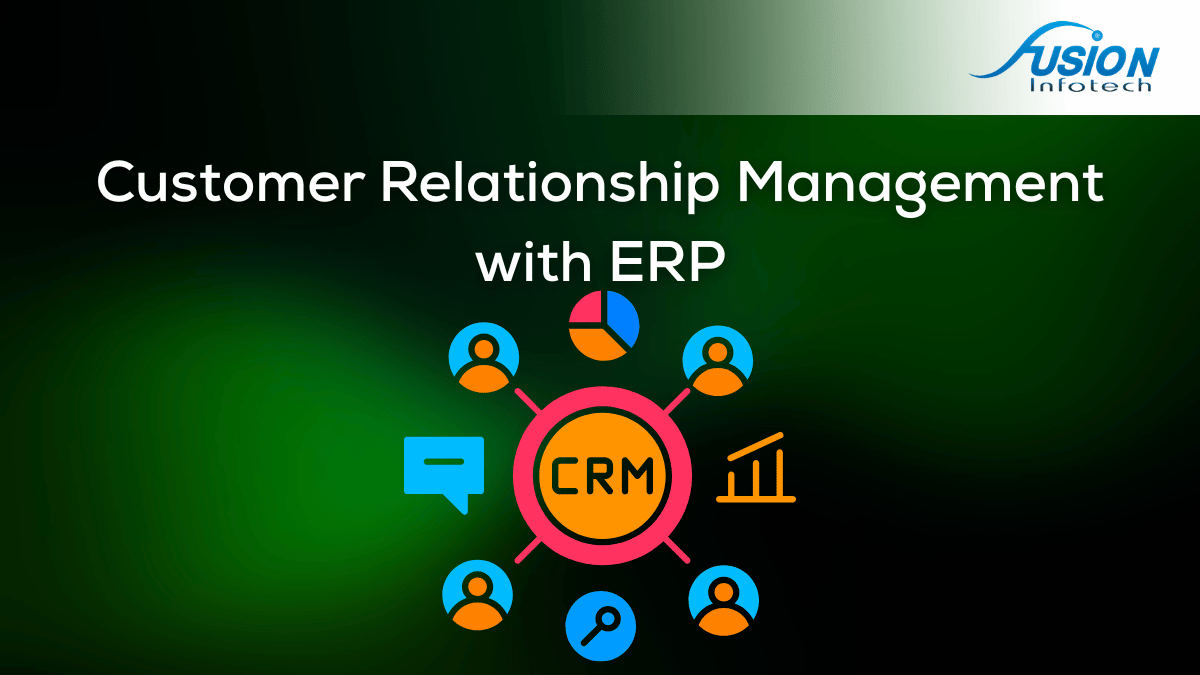
In Bangladesh’s competitive commercial ecosystem, maintaining strong customer relationships is essential for long-term growth. Across manufacturing, retail distribution, pharmaceuticals, and service industries, businesses face increasing pressure to deliver personalized, rapid, and transparent customer experiences. However, relying on standalone Customer Relationship Management (CRM) tools that run independently of backend accounting and inventory systems creates data silos, delayed order fulfillments, and lost sales opportunities.
Integrating Customer Relationship Management (CRM) with Enterprise Resource Planning (ERP) bridges the gap between front-office sales teams and backend operational workflows. By connecting lead generation, quotation management, and customer support directly with real-time inventory balances, general ledger accounting, and order processing, integrated CRM-ERP platforms turn customer interactions into predictable revenue drivers.
At Fusion Infotech, Bangladesh’s premier certified SAP technology authority, we help small and mid-sized enterprises (SMEs) and industrial conglomerates deploy integrated SAP Business One ERP environments. Under the leadership of Co-Founder, CTO, and Chairman Mr. Mohammad Makshuder Rahman, our enterprise consulting practice empowers organizations to unify customer-facing activities with core operational databases.
.png)
Customer Relationship Management (CRM) is a strategic combination of practices, business logic, and software technology designed to manage and optimize an organization’s interactions with current and potential customers throughout the customer lifecycle.
A standalone CRM system centralizes customer contact data, tracks sales pipelines, manages marketing campaigns, logs customer service interactions, and automates sales follow-ups. The primary goal of CRM is to improve customer satisfaction, foster brand loyalty, and drive top-line revenue growth.
Enterprise Resource Planning (ERP) is a centralized business software platform engineered to coordinate an organization’s core operational and financial processes into a single, reliable database. Dominated by industry platforms like SAP Business One, an ERP system coordinates financial accounting, procurement, warehouse inventory management, manufacturing, human capital, and order fulfillment.
By creating a single source of truth across all business units, an ERP system eliminates data duplication, enforces process controls, and provides real-time business intelligence for executive decision-making.
Combining CRM capabilities within a native ERP engine, such as SAP Business One, delivers a unified operational matrix:
Unifies customer touchpoints into a centralized master data record. Sales, finance, and customer support teams access shared profiles that display open sales opportunities alongside billing terms, payment histories, and active service contracts.
Eliminates data transfer delays between sales and operations. When a sales representative wins an opportunity in the CRM interface, the system generates a Sales Quotation or Sales Order in the ERP database with one click, triggering automated inventory allocation and picking tasks.
Schedules and tracks phone calls, meetings, email correspondences, and tasks directly against customer master cards. Automated alerts remind sales managers to follow up on aging quotes or high-value leads.
Combines sales pipeline forecasts with actual inventory availability and financial margins. Executive cockpits display visual conversion rates, sales rep performance metrics, and profitability across regions, product categories, or customer segments.
Adapts to evolving business models, whether managing B2B distributor networks, industrial sales contracts, or direct B2C retail operations. Open API architectures enable seamless connection with specialized add-ons, e-commerce storefronts, and MFS payment gateways.
Equips field representatives and service engineers with mobile app access. Sales teams can check live stock availability, generate on-site customer quotes, log meeting notes, and submit orders directly from their smartphones.
Customer service agents gain immediate visibility into order shipment tracking, batch numbers, and invoice statuses. Service desk tickets link directly to installed equipment master data and warranty contracts for faster first-contact resolution.
For expanding enterprises across Bangladesh, running separate CRM and accounting software introduces severe operational risk. Integrating CRM within a unified ERP framework delivers measurable business value:
[ Standalone CRM + Disconnected ERP ]
│
(Siloed Data, Double Entry, Inventory Lag)
▼
==============================================
[ Integrated SAP Business One ERP-CRM Engine ]
==============================================
│
┌───────────────────────────────┼───────────────────────────────┐
▼ ▼ ▼
[ Accelerated Order Execution ] [ Improved Margin Control ] [ Higher Customer Retention ]
In SAP Business One, CRM functionality is built directly into the ERP core rather than running as an external, third-party add-on. Key functional components of the SAP Business One CRM module include:
Traditional, disconnected CRM practices often expose organizations to operational bottlenecks. Implementing an integrated ERP-CRM solution directly addresses these challenges:
Explore specialized enterprise ERP solutions customized by Fusion Infotech for regional industries:
An integrated ERP system combines sales interaction history with live inventory balances, customer credit statuses, open invoices, and delivery tracking. This gives teams complete visibility to serve clients effectively without switching between separate software applications.
Yes. SAP Business One offers native mobile applications for iOS and Android, allowing field sales representatives to check live stock, create sales quotes, log meeting activities, and submit customer orders directly from job sites.
Through Fusion Infotech’s local add-ons, the CRM-ERP workflow automatically applies correct localized VAT rates, Supplementary Duty (SD), and Tax Deduction at Source (TDS) schedules when sales quotes convert into official NBR Mushak 6.3 tax invoices.
Organizations can deploy SAP Business One On-Premise, on a Private Cloud, or via a managed Partner Cloud hosted by Fusion Infotech.
Managing customer relationships through disconnected spreadsheets or isolated software applications exposes your enterprise to operational delays, inventory overselling, and lost revenue. Integrating Customer Relationship Management with ERP provides the structural foundation, real-time visibility, and operational stability required to deliver exceptional customer experiences and secure long-term market leadership.
By unifying lead management, sales quotations, inventory tracking, financial accounting, and customer service onto a single cloud-ready platform, SAP Business One converts customer management from an administrative task into a competitive advantage.
Ready to transform your sales architecture and elevate customer satisfaction? Partner with Fusion Infotech—Bangladesh’s premier certified SAP technology authority.
Contact our enterprise consulting team at Fusion Infotech today to schedule a comprehensive SAP Business One CRM-ERP demonstration and blueprinting session.


.svg)
© 2025 Fusion Infotech Ltd. All rights reserved.





.png)
