Small and medium-sized enterprises (SMEs) represent the backbone of the global economy and drive the commercial landscape in Bangladesh. Operating across fast-paced markets like Dhaka, Chattogram, Gazipur, and Narayanganj, SMEs frequently face operational bottlenecks—including tight delivery deadlines, constrained working capital, limited in-house IT staff, and multi-departmental silos.
Navigating these challenges requires operational agility, real-time data visibility, and process automation. Enterprise Resource Planning (ERP) software has evolved from a luxury reserved for multinational corporations into a vital digital foundation for expanding SMEs seeking to boost productivity, enforce internal controls, and maximize profit margins.
According to global market research, the cloud ERP sector is projected to exceed $76 billion as mid-market organizations shift away from fragmented spreadsheets toward unified cloud platforms. At Fusion Infotech, Bangladesh's certified SAP technology partner and digital transformation architect, we help small and growing businesses select, deploy, and optimize world-class ERP software tailored to localized market dynamics.
Key Takeaways
Centralized Digital Foundation: ERP software consolidates isolated software systems—accounting, inventory, sales, and HR—into a single, accessible database.
Rapid ROI through Cloud Delivery: Modern Cloud ERP platforms eliminate high upfront hardware expenditures (CapEx), offering scalable subscription models (OpEx) designed for growing budgets.
10 Essential Functional Modules: A complete SME ERP suite should include financial management, inventory tracking, HRM, CRM, supply chain control, production management, business intelligence (BI), project management, compliance automation, and mobile accessibility.
Critical Vendor Evaluation Criteria: Selecting the right implementation partner requires assessing industry domain experience, software scalability, total cost of ownership (TCO), and localized National Board of Revenue (NBR) tax compliance capabilities.
What is Enterprise Resource Planning (ERP) for SMEs?
Consider the typical operational friction inside a growing business: the sales team uses one software tool to capture client orders, warehouse workers manually track inventory on paper ledgers, finance relies on offline spreadsheets for invoicing, and HR manages payroll on a separate application. This disconnect leads to duplicate data entry, inventory discrepancies, delayed customer quotes, and compliance risks.
Enterprise Resource Planning (ERP) software unifies these core operational functions onto a single digital platform. It acts as an operational neural network, ensuring that a sales order placed by a representative instantly updates real-time warehouse stock, notifies procurement to reorder raw materials, and logs financial transactions into general ledger accounts automatically.
For small and mid-sized enterprises, platforms such as SAP Business One offer an affordable, flexible, and responsive business management solution designed to streamline daily operations without unnecessary system complexity.
Top 10 Essential Features of SME ERP Software
When evaluating ERP software options, business owners and IT managers must ensure the chosen platform delivers robust functionality across ten core operational modules:
1. Financial Management & Ledger Control
The financial module serves as the central ledger of your enterprise, maintaining strict adherence to accounting standards (IFRS) and local regulatory requirements. Core capabilities include:
General Ledger (GL): Tracks all debit and credit journal entries automatically across every operational department.
Accounts Payable & Receivable (AP/AR): Manages vendor liabilities, tracks incoming customer payments, and automates credit control alerts.
Budgeting & Cash Flow Analytics: Enables real-time financial forecasting, cash position monitoring, and variance reporting for strategic decision-making.
2. Real-Time Inventory Control & Warehouse Management
Maintaining optimal inventory levels prevents working capital from being tied up in stock while avoiding stock-outs that compromise customer trust. Key features include:
Live Inventory Tracking: Provides real-time visibility into physical stock levels across multi-warehouse networks.
Order Fulfillment Automation: Streamlines sales order processing, pick-list generation, and dispatch logging.
Supplier & Bin-Location Integration: Connects stock movements directly to supplier purchase requisitions and precise bin allocation paths.
3. Human Capital Management (HCM) & Payroll Integration
Enforces operational control across distributed workforces in today's digital era. Essential functions include:
Remote Executive Approvals: Allows managers to approve purchase orders, credit overrides, and expense requests on iOS or Android devices.
Real-Time Mobile Updates: Gives field sales reps and warehouse personnel live access to stock levels and customer accounts.
Top ERP Software Options for Growing SMEs
Selecting the ideal software platform depends on your specific industry, operational scale, and growth plans. Here is an evaluation of the leading global ERP solutions for small and mid-sized enterprises:
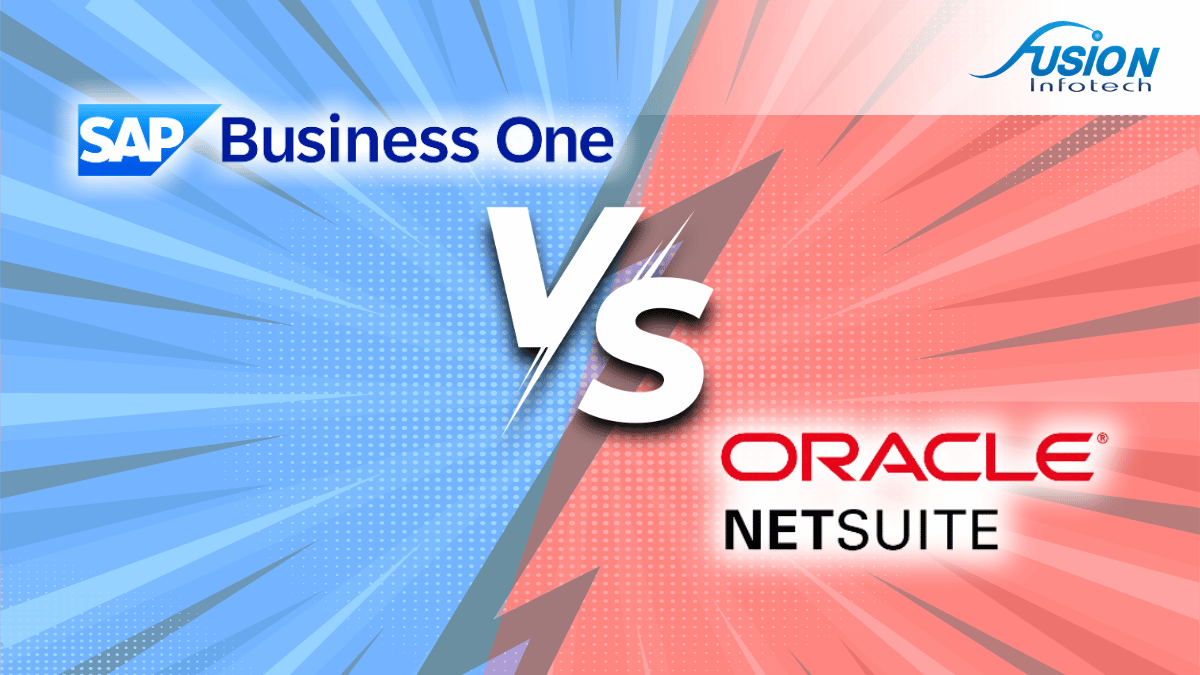
SAP Business One Explicitly engineered for small and medium-sized enterprises, SAP Business One delivers powerful enterprise-grade features without the heavy complexity of higher-tier platforms. Covering financials, sales, procurement, inventory control, manufacturing, and analytics in a single solution , it is backed by Fusion Infotech’s certified local support and deep NBR VAT localization in Bangladesh.
Oracle NetSuite A comprehensive cloud-based ERP suite designed for expanding mid-market companies. NetSuite unifies financial accounting, e-commerce, order management, and CRM into a hosted environment accessible from any browser, making it popular for businesses with multi-location or remote operations.
Fusion Robust A high-performance enterprise solution built on the flexible, open-source ERPNext framework and delivered by Fusion Infotech. Fusion Robust enhances core ERPNext capabilities with resilient cloud architecture, localized NBR tax/VAT compliance, and enterprise-grade backend infrastructure, ensuring high availability and scalable data operations for expanding businesses.
Microsoft Dynamics 365 Business Central A versatile business management system designed for SMEs looking to streamline financial and operational workflows. It offers native integration with Office 365, Teams, and Microsoft productivity tools, providing an intuitive interface for staff already accustomed to Microsoft applications.
Odoo ERP An open-source, modular ERP platform offering high flexibility. Businesses can deploy core applications—such as invoicing or stock tracking—and add additional modules as operations expand, offering an entry point for budget-conscious organizations.
Infor CloudSuite Offers industry-tailored cloud ERP editions configured for specialized sectors, including industrial manufacturing, distribution, and healthcare. It focuses on shop-floor control, supply chain tracking, and operational automation.
Acumatica Cloud ERP A flexible cloud ERP solution featuring a unique resource-based licensing model rather than strict per-user fees. It provides integrated suites for general business, manufacturing, construction, and distribution.
Zoho ERP & Business Suite A lightweight, cloud-based productivity and business management suite ideal for early-stage startups and small businesses seeking an affordable, easy-to-configure platform for accounting, contact tracking, and order handling.
SYSPRO ERP Specialized enterprise software engineered specifically for manufacturing and distribution businesses. SYSPRO focuses heavily on shop-floor scheduling, inventory optimization, and supply chain management.
Key Criteria for ERP Vendor Selection for SMEs
Selecting the right software platform is only half the battle; choosing the right implementation partner is equally critical to project success. Evaluate potential vendor partners using the following criteria:
Industry & Domain Expertise: Partner with a consulting firm that demonstrates a strong track record in your specific sector (e.g., garments/RMG, pharmaceuticals, trading, or retail) and can share relevant client case studies.
Credibility & Market Reputation: Verify the partner’s certified status, client references, and local market experience to ensure reliable post-implementation support.
Product Scalability & Architecture: Confirm that the ERP system and server infrastructure can accommodate future growth, such as adding new warehouse hubs or business units, without requiring system redesigns.
User Experience (UX) & Usability: Choose an intuitive interface that simplifies daily tasks for operational staff, ensuring rapid user adoption across all departments.
Integration Capabilities: Ensure the ERP platform connects smoothly with existing third-party applications (such as e-commerce platforms, POS terminals, or specialized HR tools like WorkedIn HRMS) via secure APIs.
Total Cost of Ownership (TCO): Evaluate licensing fees, implementation costs, custom development, user training, and ongoing technical support against the projected return on investment (ROI).
Vendor Training & Local Support: Select a vendor that offers comprehensive user training programs, system documentation, and dedicated local helpdesk support to resolve technical queries quickly.
Implementation Methodology: Ensure the vendor follows a structured deployment methodology—encompassing process blueprinting, data cleansing, user acceptance testing (UAT), and post-go-live support—to minimize business disruption.
Data Security & Statutory Compliance: Confirm that the system enforces robust security protocols (role-based access control, data encryption, automated backups) and natively supports Bangladesh regulatory compliance (NBR VAT guidelines).
Frequently Asked Questions
1. How much does an ERP implementation cost for an SME in Bangladesh?
The total cost depends on business complexity, chosen deployment model (Cloud subscription OpEx vs. On-Premise CapEx), required user licenses, and custom localization needs. SAP Business One implemented by Fusion Infotech offers modular pricing structures designed specifically to match SME budgets.
2. How long does it take to implement an ERP system for a mid-sized business?
A standard SME ERP deployment using SAP Business One typically takes 8 to 16 weeks, covering initial business process mapping, system configuration, data migration, user acceptance testing, and go-live deployment.
3. Can SAP Business One integrate with local HR and payroll systems?
Yes. SAP Business One integrates smoothly with specialized localized software, such as WorkedIn HRMS, allowing organizations to connect employee attendance, dynamic payroll calculations, and labor costing directly to core general ledger accounts.
Conclusion
For growing small and medium-sized enterprises, continuing to rely on offline spreadsheets, manual ledgers, or disconnected software tools introduces significant operational risk. Choosing the right ERP solution unifies core business functions onto a single digital platform, delivering the real-time visibility, automated controls, and operational agility required to expand sustainably in today's competitive market.
By combining world-class software like SAP Business One with Fusion Infotech’s certified implementation practice and localized NBR VAT compliance modules, growing businesses convert operational complexity into a distinct strategic advantage.
Ready to streamline your business operations and accelerate growth? Partner with Fusion Infotech—Bangladesh’s premier SAP enterprise partner.
Contact our enterprise consulting team at Fusion Infotech today to schedule your SME operational assessment and live SAP Business One demonstration.
Mohammad Makshuder Rahman
Co-Founder, CTO & Chairman of Fusion Infotech
He is the Co-Founder, CTO, and Chairman of Fusion Infotech Limited. With an MBA, a CIS degree , and over 23 years of Oracle experience , he drives technical excellence and digital transformation. He holds multiple Oracle certifications, including Cloud Certified Architect.

%20for%20SMEs.png)


.svg)





.png)
