Back
Back

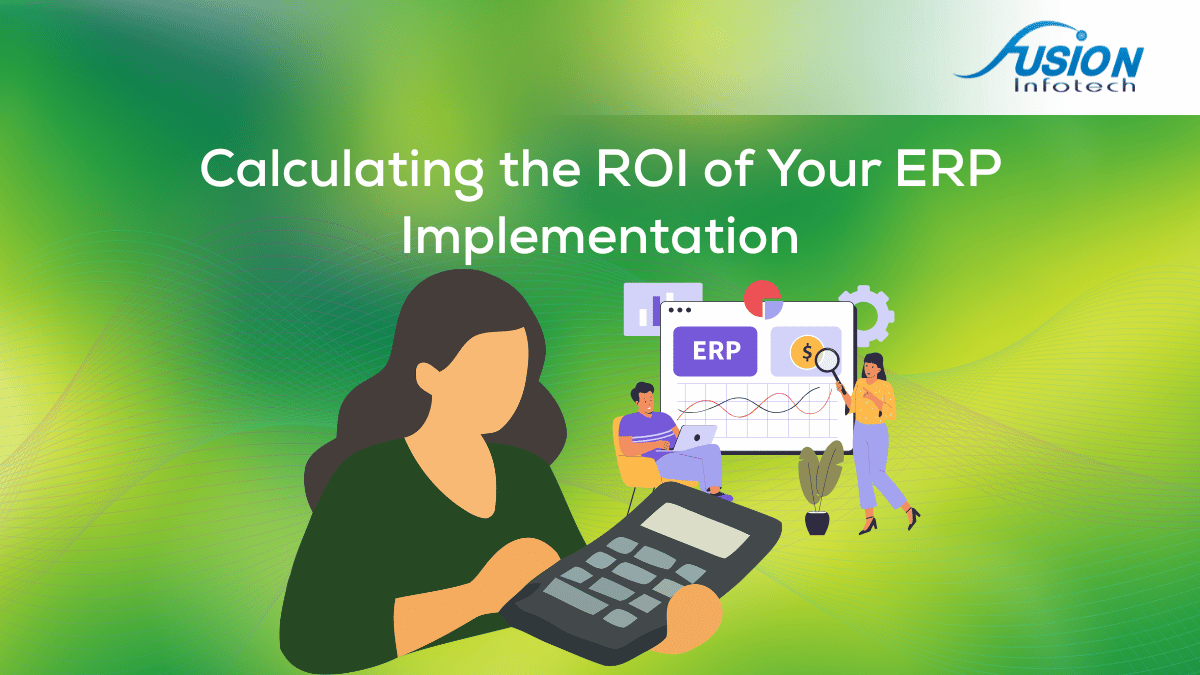
Calculating the ROI of Your ERP Implementation

Category

ERP Software

Published Date

29 Jun 2026

Read Time

7–8 Minutes

In today’s hyper-competitive business landscape, implementing an Enterprise Resource Planning (ERP) system is one of the most significant strategic moves a company can make. However, an ERP project, whether it’s SAP S/4HANA, Oracle ERP Cloud, or a localized solution, requires a substantial investment of capital, time, and human resources.

The most pressing question for C-suite executives and business owners remains: How do we measure the Return on Investment (ROI) of our ERP implementation?

In this guide, we break down the complex mechanics of calculating ERP ROI, shifting the focus from simple cost-saving to long-term enterprise value creation. By the end of this blog, you will understand how to build a robust financial case for your ERP investment and ensure your organization achieves a positive return.
Key Takeaways

  • Holistic Analysis: ROI is not just about cutting costs; it’s about measuring productivity gains, decision-making speed, and future scalability.
  • The ROI Formula: ROI = (Total Benefits – Total Investment) / Total Investment.
  • Long-Term View: Successful ERP projects should be evaluated over a 5-year cycle, accounting for licensing, ongoing maintenance, and internal training.
  • Quantifiable Impact: Studies show that successful ERP deployments often yield a massive ROI (up to $7.23 for every dollar spent) through reduced inventory carrying costs and improved order-to-shipment times.

What is ERP?

In plain English, ERP (Enterprise Resource Planning) is the "central nervous system" of a modern organization. It integrates fragmented departmental operations; Finance, HR, Inventory, Supply Chain, and CRM; into one unified, data-driven platform.

Think of it as the ultimate business tool. Instead of having data trapped in spreadsheets across different offices, an ERP provides a real-time, 360-degree view of your operations. It automates repetitive tasks, eliminates human error, and provides the visibility needed to scale rapidly.

Why is Calculating ROI Critical?

ERP implementations are expensive. Decision-makers need to know that the capital deployed is generating tangible value. A thorough ROI analysis is crucial because:

  1. Financial Justification: It justifies the CAPEX/OPEX shift to shareholders or the board.
  2. Benchmark Progress: It sets KPIs to measure whether the system is actually delivering the efficiency promised during the sales process.
  3. Strategic Alignment: It ensures that your ERP deployment is actually solving the business bottlenecks it was designed to fix.

The 3-Step ROI Calculation Formula

To determine if your investment is paying off, you must quantify both the "hard" (monetary) and "soft" (efficiency) benefits.

Step 1: Calculate Total Investment (TCO)
  • Licensing: Perpetual license fees or recurring SaaS subscription costs.
  • Implementation Fees: Consulting, data migration, and third-party integration costs.
  • Ongoing Costs: Annual support, internal IT staffing, and infrastructure updates.

Step 2: Estimate Total Benefits

  • People Productivity: Hours saved on manual data entry and reporting.
  • Inventory Savings: Reduced holding costs and lower stockouts.
  • Procurement Savings: Negotiating better rates through centralized vendor management.
  • Speed to Market: Faster order-to-cash cycles.

Step 3: Apply the ROI Formula

ROI =
Total 5-Year Benefits - Total 5-Year Investment Total 5-Year Investment

Multiply the result by 100 to get your percentage. A ratio greater than 1.0 (or >100% ROI) indicates a profitable investment.
5 Tips to Maximize Your ERP ROI

  1. Set Clear KPIs: Don’t just "implement software." Implement a system to reduce lead times by 20% or cut invoice processing time by 50%.
  2. Prioritize Data Integrity: A system is only as good as the data fed into it. Prioritize cleaning your legacy data before migration.
  3. Invest in Training: Software is a tool; people are the users. Without proper training, the most expensive ERP will yield zero ROI.
  4. Leverage Full Functionality: Don’t just use 10% of the software. Explore advanced features like predictive analytics and automated workflows.
  5. Continuous Optimization: An ERP isn't "set it and forget it." Perform regular system audits to ensure you are utilizing the latest updates.

The ERP ROI Analysis Areas

When analyzing your returns, look at these five specific domains:

  • People Productivity: Automation of routine workflows.
  • Decision-Making: The speed at which leaders can access accurate, real-time reports.
  • Finance & Accounting: Faster period-end closings and automated reconciliation.
  • Operations: Optimized supply chain and reduced production waste.
  • Business Technology: Transitioning from data silos to a "Single Source of Truth."

Conclusion

Calculating the ROI of an ERP investment is a complex but necessary process. By taking a 5-year view and carefully weighing the costs against the quantifiable benefits, you can transform your ERP project from an expense into a powerful driver of long-term profitability.

Remember, a positive ROI is not an accident; it is the result of strategic planning, executive commitment, and a strong partnership with a certified implementation authority.

Need an expert audit of your ERP potential? As leaders in digital transformation and enterprise architecture, Fusion Infotech helps organizations bridge the gap between complex software configurations and real-world financial clarity. Contact our senior consultants today to audit your ERP strategy and secure your financial future.

FAQ

What is a good ROI ratio?

Generally, an ROI ratio of 1:1 (or 100%) is the baseline, but enterprise projects are expected to perform much higher over 5 years. A ratio above 2.0 (200%) is typically considered a very strong return for an ERP project.

Does cloud ERP have a better ROI than on-premise?

Cloud ERP typically provides a faster ROI because it eliminates the massive upfront hardware and infrastructure costs (CAPEX), allowing you to pay as you grow.

Why does my ERP report show different net sales than my manual calculations?

This is usually due to Revenue Recognition rules. Your ERP likely adheres to accrual accounting (recognizing revenue when services are delivered), whereas manual calculations often count cash at the moment of billing. Always align your ERP reporting with your chosen accounting standard (IFRS or GAAP).


Mohammad Jishan Ahmed

Mohammad Jishan Ahmed

Co-Founder and CEO of Fusion Infotech

He is the Co-Founder and CEO of Fusion Infotech, a leading Technology service provider. With over 13 years steering tech strategy and global enterprise sales, his leadership drives innovation across diverse sectors, fosters strong international client relationships, and champions excellence within the ITES industry.