
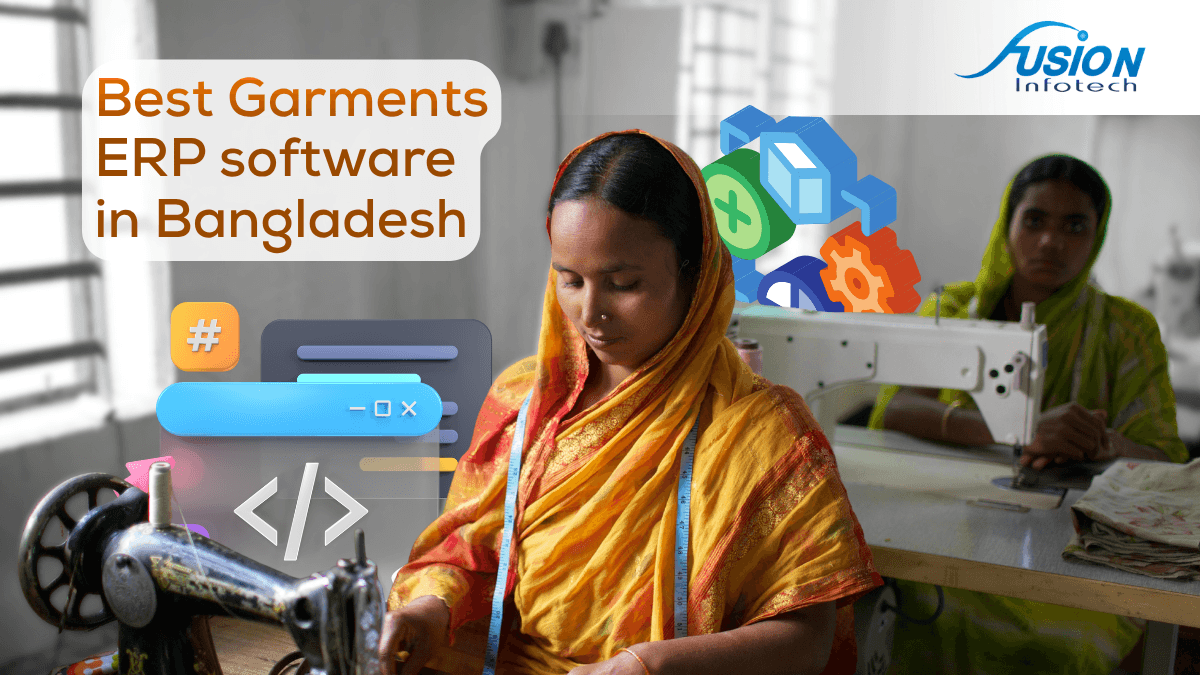
The garments industry in Bangladesh is a major contributor to the country’s economy, with a large number of garment manufacturing companies operating in the country. We know there is a good reputation for Bangladesh Garment brands in western countries. To stay competitive and manage their operations effectively, top garments in Bangladesh are turning to enterprise resource planning (ERP) software.
ERP software for a garment manufacturing company in Bangladesh can help streamline and automate various business processes, such as inventory management, production planning, and financial accounting. This can lead to increased efficiency, reduced costs, and improved decision-making capabilities.
When it comes to choosing the best garments ERP software in Bangladesh, there are many options available. Some of the top companies in Bangladesh that use ERP include Grameen Knitwear, Ha-Meem Group, and BEXIMCO Group. These companies have implemented various ERP solutions, such as Oracle and SAP, to manage their operations.
When we look at the list of companies in Bangladesh using ERP, is vast but numbers are very few when it counts for ERP in the garment industry as well as the ERP software apparel industry. Although, one of the most important factors to consider when selecting the best ERP for the textile industry is its ability to integrate with different modules. This can include modules for inventory management, production planning, and shipment procedures. Additionally, it’s important to choose an ERP software that can handle the specific needs of the garments industry, such as managing garments shipment procedures and garments ERP process flow.
Another important factor to consider is the ERP software price in Bangladesh. While cost is a significant factor, it is important to remember that the best ERP software for your company may not always be the cheapest. In fact, investing in a high-quality ERP software solution can ultimately save you money in the long run.
ERP implementation is also an important aspect to consider. It is critical to choose a software vendor that provides adequate training and support to ensure a successful implementation of the ERP software.
ERP application software can also be used in various other industries, not just the textile industry. In the garments industry, ERP software can help to manage various aspects of the business, including inventory management, production planning, and financial accounting.
ERP systems can also be integrated with other software, such as Oracle ERP and SAP ERP, to manage different aspects of the business. ERP for garment manufacturing can also be used to manage shipment procedures and other processes in the garments industry.
When it comes to choosing the best ERP software in Bangladesh, it’s important to consider your specific business needs, as well as the software vendor’s reputation and support services. With the right, ERP for garment manufacturing companies in Bangladesh can become more efficient, reduce costs, and improve overall business performance.
Garment ERP software is a type of enterprise resource planning (ERP) software specifically designed for the garments industry including garment factory management systems. It is used to manage and automate various business processes related to the production, distribution, and sale of garments.
This type of software can help to streamline and automate operations such as inventory management, production planning, and financial accounting. It can also help to manage other important aspects of the business, such as shipment procedures, order management, and customer relationship management.
Garment ERP software can integrate with other software, such as accounting and customer relationship management (CRM) software, to provide a comprehensive solution for managing the entire business. It can also include modules for specific tasks such as inventory management, production planning, and shipment procedures.
The software can also include a variety of tools and features that are specific to the garments industry, such as the ability to manage multiple suppliers, track inventory levels, and manage production schedules.
Having ERP software for your apparel company is crucial for managing and streamlining your business operations. It can help you to improve efficiency, reduce costs, and make better business decisions. The best garments ERP software in Bangladesh can be customized to integrate with different garments ERP modules, like inventory management, production planning, and shipment procedures, to meet the specific needs of the garments industry. It can also be integrated with other software, like Oracle and SAP, to manage various aspects of the business. The ERP software price in Bangladesh can vary, but investing in a high-quality ERP software solution can ultimately save your business money in the long run.

With ERP, apparel industries can easily track and manage their business activities and entire operations.
It is also integrated with other modules like supply-chain etc which can be used to manage and optimize the supply chain.
The software built an evolutionary garments ERP solution, which makes it easy to enter and track orders from anywhere in the world.
It helps to improve the production process in the manufacturing industries and enables them to be Industry 4.0 ready.
The software has easy integration and seamless integration with other systems, making it easy to manage the entire operation.
It helps to manage the entire order process from receiving an order from a buyer to delivering the final product.
The solution supports multi-currency and multi-location, making it easy to manage global operations.
The solution improves the work efficiency of the garments industry and reduces their workload.
ERP solutions can help to reduce costs by streamlining and automating processes.
The leading ERP solution for the apparel manufacturing and garments accessories industries provides a comprehensive solution for enterprise resource planning
Choosing the right ERP apparel management software for your business can be a complex process. However, by considering the following factors, you can ensure that you select a solution that will meet your specific business needs:
Additionally, to specifically address the unique demands of this sector, Fusion Infotech has added a custom Apparel Add-on in SAP Business One, making the software much easier and more intuitive for users to manage their garment operations.
By taking these factors into consideration, you can ensure that you select the best ERP software in Bangladesh that meets your specific business needs.
An apparel company, also known as a garments company, is a business that designs, manufactures, and sells clothing and accessories. The key operations of an apparel company include procurement of raw materials, production, import-export process, and sales and marketing. To manage these operations efficiently, an apparel company may use an ERP (Enterprise Resource Planning) software solution, especially for garments industries. One of the leading ERP software solutions for the apparel industry is garments ERP software Bangladesh provided by software companies like Fusion Infotech.
This software is integrated with different modules that cover all the aspects of your garments business, including finance, inventory, production, and sales. It also helps in the entire operations of your garments manufacturing process, from the order reconciliation process to the procurement of raw materials. The best ERP solution for the RMG industry is a garments ERP solution that is provided by a trusted ERP solution provider. This ERP solution is specifically designed for the RMG industry and covers all the aspects of the business process management software, including knitting and dyeing.
ERP (Enterprise Resource Planning) is an essential tool for the manufacturing industry as it helps to streamline and optimize business operations. One of the leading ERP software solutions for the manufacturing industry is garments ERP software Bangladesh provided by software companies like garments ERP Software Ltd. This software is integrated with different modules that cover all the aspects of your garments business, including finance, inventory, production, and sales. It also helps in the entire operations of your garments manufacturing process, from the order reconciliation process to the procurement of raw materials.
The best ERP solution for the RMG industry is a garments ERP solution that is provided by a trusted ERP solution provider. This ERP solution is specifically designed for the RMG industry and covers all the aspects of the business process management software, including knitting and dyeing. It also supports multi-currency and costing of orders. The software is designed to automate and manage activities including receiving an order, tracking inventory, and managing production schedules.
Software built an evolutionary garment is a software solution specifically designed for the garments industry. It is a comprehensive ERP (Enterprise Resource Planning) solution that helps to manage and optimize all aspects of the garments manufacturing process, from the order reconciliation process to the procurement of raw materials. The software is integrated with different modules that cover all the aspects of your garments business, including finance, inventory, production, and sales. It also helps in the entire operations of your garments manufacturing process, from the order reconciliation process to the procurement of raw materials.
1. Inventory Management: To solve the problem of managing inventory levels, apparel eCommerce businesses can use an ERP system to track stock movements, generate real-time reports on stock availability, and automate reordering processes.
2. Order Management: An ERP system can help to automate order processing, track orders from customers, and generate invoices and shipping labels.
3. Customer Relationship Management: By using a CRM module, apparel eCommerce businesses can manage customer interactions and communication, store customer data, and track customer behavior.
4. Payment and Shipping Integration: Integrating with payment gateways and shipping providers can automate the payment and shipping process, and make it more efficient.
5. Analytics and Reporting: By using an ERP system, apparel eCommerce businesses can access real-time reports on sales, customers, inventory, and financials, which can provide valuable insights for decision-making.
6. Multi-Channel Integration: Integrating with various eCommerce platforms such as Amazon, Shopify, etc, can help to manage and track sales across multiple channels.
7. Mobile Optimization: An ERP solution with mobile optimization features allows you to access the system on the go, and manage your business operations from anywhere.
8. Supply Chain Management: By using an ERP system, apparel eCommerce businesses can manage and optimize supply chain processes, including purchase order management and logistics.
9. Marketing Automation: By automating marketing campaigns, generating leads, and tracking their progress, apparel eCommerce businesses can improve their marketing efforts and increase sales.
ERP software can help the apparel industry overcome common challenges such as below:
A legacy solution with various workarounds cannot provide a unified end-to-end solution to modern challenges in the apparel and textile manufacturing industry. It eventually leads to duplication of effort, slower response times, and unnecessary workload. Some of the most common issues that the apparel industry faces are as follows:
The apparel industry faces numerous challenges when it comes to raw materials. Manufacturers rely heavily on supply to obtain the required color, texture, and type of fabric. Raw material issues are sometimes caused by a lack of fabric knowledge and a lack of stock availability. Vendors frequently provide poor quality or incorrect products, causing supply chain and production disruptions.
It is critical to track your inventory, preferably in real-time, because it determines how much stock is required and how much goes to waste. Inventory management that is inefficient adds costs and waste. Despite this, many manufacturers continue to use antiquated inventory management methods such as Excel. They usually write down the details on a piece of paper and track the items manually.
Production delays are common in the apparel industry and can be caused by a variety of factors, such as human error, slow production, incorrect raw materials, a lack of transparency, the use of outdated technology, disparate Garment Software systems, and so on. That’s why is it mandatory to use production planning software for garment manufacturing.
The clothing order goes through a lengthy step-by-step procedure. The product requires quality assurance from start to finish. Various challenges confront garment manufacturers during order processing. Half-baked products in the warehouse are passed on to the next jobber. Inadequate follow-up with jobbers can cause production delays.
Garment defects are another common problem that apparel manufacturers face. Following the completion of a product, defects such as loose buttons, holes, discoloration, stains, inappropriate trimming, loose threads, poor ironing, and so on may exist. Because these challenges will follow manufacturers for many years, the only solution is to embrace digitalization in your business. A garment software system, such as Dynamics 365, is an apparel ERP software. It ideally provides end-to-end control and visibility over textile and apparel manufacturing, resulting in increased profitability.
There are many garments ERP solutions available in Bangladesh, but the best one will depend on the specific needs of the company. However, some of the leading garments ERP solutions in Bangladesh include:
It is important to note that, the best garments ERP solution in Bangladesh will vary depending on the specific needs of the company. It is recommended to research and compare different options, and consult with a trusted ERP solution provider to find the best solution for your business.

In the fast-paced Bangladeshi RMG (Ready-Made Garments) sector, missing a shipment deadline can result in massive financial penalties or canceled orders. Effective time management is not just a goal; it is a critical survival metric. Modern Garments ERP software is engineered to completely optimize production timelines and eliminate costly delays.
The primary advantage of a specialized apparel ERP is the aggressive automation of manual workflows. Instead of relying on disconnected spreadsheets, the software instantly automates order reconciliation, inventory tracking, production scheduling, and the generation of commercial invoices and shipping labels. By replacing manual data entry with automated workflows, factories drastically reduce lead times and boost overall workforce productivity.
Furthermore, an ERP system provides total visibility over the global supply chain. Factory managers can monitor exactly how much time is required for sourcing raw materials (like yarn or fabric), scheduling the knitting and dyeing phases, and delivering the final finished goods to international buyers. With built-in real-time analytics, executives can instantly identify production bottlenecks and make data-driven decisions to keep shipments precisely on schedule.
Beyond saving time, an enterprise-grade ERP is the ultimate tool for protecting your profit margins. Implementing apparel software creates direct cost savings across three major areas:
Ultimately, a unified ERP system acts as a financial safeguard, giving executives a comprehensive, real-time view of cash flow, operational waste, and overall business profitability.
A standalone inventory tool is not enough for a modern factory. The true power of a Garments ERP lies in its fully integrated modular architecture. When all departments speak the same digital language, the entire business operates flawlessly. Key integrated modules include:
When these modules are integrated, Bangladeshi factories can achieve Industry 4.0 standards, automating operations across multiple locations, currencies, and international borders.
Selecting the right ERP software is the most important operational decision an apparel manufacturer will make. The ideal solution depends entirely on the size, scale, and complexity of your factory.
For aggressive, scalable growth, Bangladeshi manufacturers are rapidly adopting Fusion Robust, a proprietary, cloud-native ERP designed specifically to handle the unique demands of the local textile industry. For massive conglomerates requiring global Tier-1 software, specialized platforms like Oracle or SAP Business One, enhanced with Fusion Infotech’s Custom Apparel Add-on, provide unmatched enterprise performance.
Do not let outdated software cap your factory's potential. Contact the expert consultants at Fusion Infotech today to discover how our tailored ERP solutions can optimize your supply chain, reduce costs, and prepare your garments business for global dominance.


.svg)
© 2025 Fusion Infotech Ltd. All rights reserved.







.png)
